Showing posts with label National Book Award. Show all posts

Friday, November 20, 2020

One Miss, One Hit

I managed to miss the entire National Book Award ceremony because of a Zoom meeting and then a long phone call with a friend/colleague about Pony Club. (My tenure as a volunteer is coming to an end and I am ready to pass the torch, but that's fodder for another post.) 

I broke free just in time to receive shocked and disbelieving texts from C.S. that the NBA winner was not Shuggie Bain but a total dark horse, Charles Yu's Interior Chinatown. C.S. thought it was one of the weaker finalists, so you could have knocked him over with a feather. And so the streak must begin again, if he's going to keep picking the winners.

I managed my schedule much more effectively yesterday and spent a pleasantly late lunch hour eating nachos, watching the Booker ceremony live, and deciphering British accents. That was fun! 

And Shuggie Bain took home the Booker Prize! It sounds like a violent and tender book, one that I will not enjoy reading but may well be glad I did. C.S. pegged it as "an instant classic." (Read more about the book, the ceremony, and the prize here.)

Author Douglas Stuart made a poignant acceptance speech, looking clearly surprised and grateful. I particularly liked the part where he thanked his husband, who supported him and kept the faith during the 10 years Stuart spent writing the novel. I imagine they are thoroughly celebrating this recognition of his dedication.

And I am celebrating with them! Awards season puts a nice finish on the reading year, doesn't it? 

Monday, November 16, 2020

It's That Time of Year


As we head into the heart of November, most people start thinking about the holidays. Around the cafe, though, it's award time! 

First up is the National Book Award for Fiction, to be announced on November 18 via livestream. C.S. finished all the short listed books with a week to spare this year. He said the books were uniformly rather short, but also all of good quality; specifically, he said it's the best group of finalists in the past 10 years. Of the two standouts, Leave the World Behind and Shuggie Bain, he's picked Shuggie Bain. Soon we'll know if he's right (he usually is). 

Shuggie Bain is also a finalist for the Booker Prize, which will be awarded on November 19, making a dual winner possible in this crazy, disrupted year. That would be a first, and we just might see it happen! It's a positive side effect of the coronavirus pandemic that the ceremony will be broadcast and will include a number of special guests and presentations (including Barack Obama, whose new memoir I am eager to read). I'm highly likely to tune in, even though it may mean juggling my work schedule.

Only after these awards are bestowed can we move on to the celebratory part of the year. This year, I'm ready already -- but first things first.

Thursday, November 21, 2019

Another Streak Begins


Long-time cafe denizens will recall that co-founder C.S. reads and handicaps the entire list of National Book Award finalists each year. This year was no exception, although a combination of factors -- including a power outage last night! -- prevented me from posting his predictions until now.

(The history of this tradition is recounted here.)

C.S. got up at 4:00 a.m. to finish reading the final book. He told me via telephone that he was pretty sure the winner would be either Black Leopard, Red Wolf or Trust Exercise. The former was the stuff of nightmares, filled with brutality, and the latter was incredibly ambiguous. Ultimately he leaned toward Trust Exercise because he believed that the National Book Awards are aiming to become more distinctive and this book would give them an edge.

To that I say, well done! Last year's miss means a new streak has started, but a 14-of-16 overall record of correctly predicting the winner is nothing to sneeze at.

Friday, December 7, 2018

The Color Coded Reading Challenge 2018 - My Wrap-Up


Whoo hoo! I'm finished!

True to form, I read the last book a while back but have just now posted that one last review.

Here's what I read this year, and a nice variety it is, too. Lots of prize winners, plus a couple of books that had been on my TBR list for a long time, despite the fact that they didn't win anything. Settings ran the gamut from Florida to China, while subject matter ranged from monarch butterflies to near-fatal depression to Japanese garden design and mysterious events during World War II. A little fiction, a little poetry -- this mixed bag was all good and I enjoyed it thoroughly.

Blue: Flight Behavior - Barbara Kingsolver (Orion Book Award finalist)
Red: The Boat to Redemption - Su Tong (Asian Literary Prize)
Yellow: A Travel Guide for Reckless Hearts: Stories - N.M. Kelby (Florida Book Award)
Green: The Garden of Evening Mists - Tan Twan Eng (Asian Literary Prize)
Brown: The Body Artist - Don DeLillo
Black: Darkness Visible: A Memoir of Madness - William Styron
White: The Finkler Question - Howard Jacobson (Booker Prize)
Any other color: Orange: Three Sisters - Bi Feiyu (Asian Literary Prize)
Implied color: Light: The Light Around the Body - Robert Bly (National Book Award for Poetry)

My reviews are under the Reviews tab, if you're interested.

I really enjoy this challenge -- it's low intensity and has a little bit of the thrill of the chase built into it. The fact that I've always had an affinity for things organized around the color spectrum probably has something to do with it, too. Displays like this make me happy (even when they're not made out of cute shoes).

Photo: Zappos

I can't wait to sign up for next year!

Friday, November 16, 2018

Not This Year


It's an annual tradition here at the cafe for C.S. to read and handicap the National Book Award winners. Baseball season conveniently ends shortly before the five finalists are announced on October 10, so the timing is excellent.

Following his personal tradition, C.S. devotes the hours immediately after the announcement to locating and buying first editions of the fiction nominees. Sometimes it takes more than one bookstore. This year he found all the novels in one sweet location.

(BTW, also part of C.S.'s personal collecting rule is that he must buy his books in person or receive them as gifts. That way the quest isn't too easy and he enjoys some adventures along with his purchases.) 

Anyway, the timing continues to be excellent because the Miami Book Fair takes place in mid-November, usually featuring finalist authors, so C.S. has the opportunity to get his first editions signed. Always an eye on the future, that guy. He's ended up with some relatively rare books that way.

Unlike some collectors, C.S. actually reads his books. Every year he puts the hammer down and reads all his NBA finalists before the winner is announced. This year he had 160 pages left on the final day, but managed to finish with 10 hours to spare.

In years past he's also correctly predicted the winner, based on his own reading acumen, 13 of 14 times! Unfortunately, this year dropped his record to 13 of 15. He found it difficult to make a prediction: the books were quite evenly matched, unlike some years past where there were a few strong candidates and others clearly not equal to the standard. (If you want to read some of those past prediction posts, click here to find them collected, along with a few reviews.) 

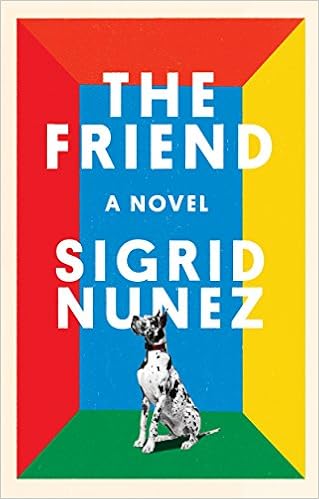
This year, C.S.'s personal favorite was A Lucky Man; he feels it has the potential to be enduring. He picked The Great Believers and Florida as the two most likely winners. Two long shots were Where the Dead Sit Talking and The FriendUltimately, after some thought, he chose Florida as the most likely to win.

And of course we now know that The Friend won. Sometimes longshots come through!

C.S., however, remains skeptical. He's just not sure that a women bonding with a Great Dane is enough to hang a novel on, much less a prize-winning novel. Maybe I'll have to read it myself!

Monday, October 22, 2018

Light? Not So Much


Robert Bly is perhaps best known as the author of Iron John: A Book About Men, an important and still timely book about modern masculinity. These poems have a robust voice -- distinctively masculine, if there is such a thing -- as they deal in dark images invoking death, disasters both national and personal, and the Viet Nam War. I read them with trepidation, still feeling tender and skittish from my recent post-apocalyptic reading.

Bly deftly combines disparate words and images, creating meanings that bounce off each other like ripples confined in a narrow pool, leaving the reader to make sense of the overlaps. His subjects are often political and always distinctly American, flavored with despair and resistance. They reflected a segment of the national mood when they were written, and they have aged well.

Excerpt:

At a March against the Vietnam War

Washington, November 27, 1965

Newspapers rise high in the air over Maryland

We walk about, bundled in coats
     and sweaters in the late November sun

Looking down, I see feet moving
Calmly, gaily,
Almost as if separated from their bodies

But there is something moving in the dark somewhere
Just beyond
The edge of our eyes: a boat
Covered with machine guns
Moving along under trees

It is black,
The hand reaches out
And cannot touch it--
It is that darkness among pine boughs
That the Puritans brushed
As they went out to kill turkeys

At the edge of the jungle clearing
It explodes
On the ground
 
We long to abase ourselves

We have carried around this cup of darkness
We have longed to pour it over our heads

We make war
Like a man anointing himself

Note: This book completes my reading for the Color Coded Reading Challenge (light). Hooray! But I still have a few reviews to write before I'm officially finished.  

Monday, December 4, 2017

A Modern Mixed Bag


My reaction to Robert Lowell's Life Studies and For the Union Dead is decidedly mixed, which seems appropriate for a book that's assembled from very disparate works, one of which -- Life Studies -- won the National Book Award for Poetry in 1960.

Parts 1 and 2 of Life Studies contain autobiographical essays, largely focused on family circumstances and business associates of Lowell's father, providing a child's perspective filtered through an adult sensibility. The essays are imbued with early 1900's Boston propriety and status-consciousness, at times reminiscent of Edith Wharton, and they are also quite amusing. Artful details such as his father's monogrammed garbage cans lend flashes of insight to Lowell's stories of his oh-so-proper-but-not-quite-top-drawer childhood.

I thoroughly enjoyed the essays, which read as you would expect essays by a poet to read, with precise and sometimes lyrical word choices. Perhaps that makes their contrast with the poems in the latter two sections and in For the Union Dead all the more notable. The essays are witty but restrained, whereas the poems are thoroughly modern, right down to impressionistic imagery that requires the reader to tease out the meaning.

Sometimes Lowell's choices are obscure enough to be jarring, as when he describes a seal swimming "like a poodle" in the ocean (a poodle? I had to read that line twice to be sure). Lowell clearly knows how to marshal the language, however; even his strange juxtapositions have a certain power, even when it's difficult to tell exactly what he's talking about. He walks the line between formal poetry and free verse, and writes revealingly about his struggles with mental illness.

Considering the social structures in place then, being modern in 1959 is quite a feat!

Excerpt:

After the heat and push of Commander Billy, it was pleasant to sit in the shade of the Atkinsons. Cousin Ledyard wasn't exactly an admiral: he had been promoted to this rank during the World War and had soon reverted back to his old rank of captain. In 1926 he was approaching retirement age and was still a captain. He was in charge of a big, stately, comfortable, but anomalous warship, which seldom sailed further than hailing distance from its Charlestown drydock. He was himself stately and anomalous.

Note: The book counts toward the Birth Year Reading Challenge, the 52 Books in 52 Weeks challenge, and is the B (Boston) book in the Where Are You Reading? challenge. It also adds another read book to my National Book Award for Poetry winners list. I'm so efficient!  

Wednesday, November 29, 2017

Winning Streak


The National Book Award winners were announced November 14 and Sing, Unburied, Sing won in the fiction category. What's most impressive about that victory (in my mind, anyway) is that C.S. once again predicted the winner.

For many years now, C.S.'s practice has been to wait eagerly for the finalists to be announced in mid-October, immediately track down first editions of each one, and settle in to read them all in the month before the winner is named, thereby qualifying to predict which book will win.    

His experience with reading most of the winners and finalists has given him a very discerning eye. As of 2009, he was 5 for 6 in picking the winner, and he's continued the streak since then. This year he picked Sing, Unburied, Sing without any hesitation, having found no real contender among the finalists this year. Some years are stronger than others, even at this level. Still, his record is impressive!   

Thursday, January 5, 2017

Birth Year Reading Challenge 2017 - My Sign-Up


I've got to do my own challenge, right?

And by that I mean I've got to do my own challenge. No slacking when you're the host!

Books published in (gasp) 1959:

1. Life Studies for the Union Dead - Robert Lowell (NBA Poetry winner) (review)
2. Advise and Consent - Alan Drury (Pulitzer winner) (review)
3. The Flame Trees of Thika: Memories of an African Childhood - Elspeth Huxley (review)

These turned out to be a nice mix: one from the TBR shelf, one that I'll have to buy or borrow, and one that I'm able to get from Paperbackswap, just for the asking. Also, two prize-winners from the on-going list reading project, and one just for fun.

Now to get down to the business of reading . . . .

Monday, October 31, 2016

A Prediction


You heard it here first.

The National Book Award winner will be announced on November 16 at the big shindig in New York City. I don't read this prize -- the winners tend to be too experimentally modern for my taste -- and my knowledge of the process and the nominees is limited. Fortunately, there's lots of good information at the NBA website.

You may recall from years past that each fall C.S. buys first editions of the finalists as soon as they're announced and reads them before the prize is awarded. It's his own version of a holiday tradition, and has led (as you can imagine) to quite a collection of high-quality books. He also has an impressive record of predicting the winner.

This year it's almost too easy: The Underground Railroad by Colson Whitehead, is a slam dunk from a weak field, according to C.S. And I quote: "If it doesn't win, I will eat my bookmark."

Friday, July 8, 2016

National Book Award for Poetry

I'm always on the lookout for new poets, but at the same time I'm always trying to broaden my appreciation and knowledge by reading the "best" of the past. Hence this list.

The National Book Award books are a little too "out there" for me -- they seem to reward the most avant-garde literary works in a given year  -- but I figure a stretch in the poetry department is good for the soul. More about the prize here, if you're interested: National Book Award Winners, by category.

It also gives me something else to run down in bookstores, which is a good thing. Not that I need an excuse to spend more time browsing the shelves!

Green means I'm still seeking it. Blue means it's on the TBR shelf, perhaps even languishing there -- in a good way, of course. Poetry and leisure go together, don't they?

1950: Paterson: Book III and Selected Poems - William Carlos Williams
1951: The Auroras of Autumn - Wallace Stevens
1952: Collected Poems - Marianne Moore
1953: Collected Poems, 1917-1952 - Archibald MacLeish
1954: Collected Poems - Conrad Aiken
1955: The Collected Poems of Wallace Stevens - Wallace Stevens
1956: The Shield of Achilles - W.H. Auden
1957: Things of the World - Richard Wilbur
1958: Promises: Poems, 1954-1956 - Robert Penn Warren
1959: Words for the Wind - Theodore Roethke
1960: Life Studies - Robert Lowell
1961: The Woman at the Washington Zoo - Randall Jarrell
1962: Poems - Alan Dugan
1963: Traveling Through the Dark - William Stafford
1964: Selected Poems - John Crowe Ransom
1965: The Far Field - Theodore Roethke
1966: Buckdancer's Choice: Poems - James Dickey
1967: Nights and Days - James Merrill
1968: The Light Around the Body - Robert Bly
1969: His Toy, His Dream, His Rest - John Berryman
1970: The Complete Poems - Elizabeth Bishop
1971: To See, To Take - Mona Van Duyn
1972: Selected Poems - Howard Moss; Frank O'Hara
1973: Collected Poems, 1951-1971 - A. R. Ammons
1974: The Fall of America: Poems of these States, 1965-1971 - Allen Ginsberg and Diving into the Wreck: Poems 1971-1972 - Adrienne Rich
1975: Presentation Piece - Marilyn Hacker
1976: Self-portrait in a Convex Mirror - John Ashbery
1977: Collected Poems, 1930-1976 - Richard Eberhart
1978: The Collected Poems of Howard Nemerov - Howard Nemerov
1979: Mirabell: Books of Number - James Merrill
1980: Ashes - Philip Levine
1981: The Need to Hold Still - Lisel Mueller
1982: Life Supports: New and Collected Poems - William Bronk
1983: Selected Poems - Galway Kinnell and Country Music: Selected Early Poems - Charles Wright
(not awarded 1984-1990)
1991: What Work Is - Philip Levine
1992: New & Selected Poems - Mary Oliver
1993: Garbage - A.R. Ammons
1994: A Worshipful Company of Fletchers - James Tate
1995: Passing Through: The Later Poems - Stanley Kunitz
1996: Scrambled Eggs & Whiskey, Poems 1991-1995 - Hayden Carruth
1997: Effort at Speech: New & Selected Poems - William Meredith
1998: This Time: New and Selected Poems - Gerald Stern
1999: Vice: New & Selected Poems - Ai
2000: Blessing the Boats: New and Selected Poems 1988-2000 - Lucille Clifton
2001: Poems Seven: New and Complete Poetry - Alan Dugan
2002: In the Next Galaxy - Ruth Stone
2003: The Singing - C.K. Williams
2004: Door in the Mountain: New and Collected Poems, 1965-2003 - Jean Valentine
2005: Migration: New and Selected Poems - W.S. Merwin
2006: Splay Anthem - Nathaniel Mackey
2007: Time and Materials - Robert Hass
2008: Fire to Fire: New and Collected Poems - Mark Doty
2009: Transcendental Studies: A Trilogy - Keith Waldrop
2010: Lighthead - Terrance Hayes
2011: Head Off & Split - Nikky Finney
2012: Bewilderment: New Poems and Translations - David Ferry
2013: Incarnadine - Mary Szybist
2014: Faithful and Virtuous Night - Louise Glück
2015: Voyage of the Sable Venus - Robin Coste Lewis
2016: The Performance of Becoming Human - Daniel Borzutzky
2017: Half-light: Collected Poems 1965-2016 - Frank Bidart
2018: Indecency - Justin Phillip Reed
2019: Sight Lines - Arthur Sze
2020: DMZ Colony - Don Mee Choi
2021: Floaters - Martin Espada
2022: Punks: New & Selected Poems - John Keene
2023: from unincorporated territory [amot] - Craig Santos Perez
2024: Something about Living - Lena Khalaf Tuffaha
2025: The Intentions of Thunder - Patricia Smith

Monday, June 4, 2012

Battle of the Prizes - American Version - World's Fair


In this poetic blend of novel and memoir, which I read for the Battle of the Prizes - American Version, Doctorow does an excellent job of delivering the feelings and impressions of a young boy growing up in 1930 in the Bronx. The novel uses shifting perspectives and different levels of language, swooping from vignette to vignette almost like a movie camera; at the same time, it maintains a coherence that makes it easy to identify with and to follow.

Edgar, the main character (who may or may not be the author himself), is an unusually perceptive and descriptive young narrator, and although his story delivers plenty of immediacy, it is clearly told from the moderately nostalgic viewpoint of an adult.

Although Edgar's brother and his mother take over the narration occasionally, they always begin by directing their words to Edgar, explaining that he'd gotten some detail wrong or elaborating on some point that he'd made about them. This linking device ties the novel together nicely and adds to its cinematic, memoirish feel, as though the author decided he needed another perspective and went off to interview the other people involved about their version of events.

A lot of the details remain Edgar's, however, and he doesn't intrude as an adult very often. His parents' marriage has its bright spots but is overall fairly unhappy, leaving both parties dissatisfied with their lives. Doctorow gives mostly the preadolescent perspective on this, which is probably a good choice. If he knew too much, the boyish focus would be lost.

This is, after all, Edgar's story about the year of the World's Fair. The fair occupies a major position in the novel as a kind of promised land. When Edgar finally attends, the fair turns out to be as complex and evasive as any long-sought goal, finally attained.

Doctorow's prose at times approaches the poetic, as he filters Edgar's childhood perceptions through a clearly adult intellect. It's appropriate that each chapter seems to end with this poetic voice, transitioning the narrator between the worlds of childhood and adulthood. In this masterful novel that works on many levels, Doctorow documents the year in Edgar's life when he discovered he could do exactly that.

Excerpt:

I had the good fortune to be living in this neighborhood, but its borders were not inviolate. That my house was of red brick, which I knew was essential from the tale of the three little pigs, evoked in me feelings of deepest gratitude. However, in bed at night, after the light was out, I heard outside in the dark sometimes the kicking over of ash cans, or a police siren, and then closer to my ear but somehow less audible, the breath of someone watching me. And in my sleep figures would loom in threatening gesture and just as suddenly recede into colored swirling points, as if I myself had been spread-eagled on a wheel spinning so fast that the colors melted together and became a target.

Friday, February 3, 2012

American Battle of the Prizes Wrap-Up & Sign-Up


So much for that.
Now that it's February, I have to face up to the fact that I failed to finish a single book for the 2011 Battle of the Prizes - American Version. I made great progress on The Known World during a 3-hour block of time last Saturday morning, but it just wasn't enough. I was a major underachiever in the reading department this year.
I feel especially bad about messing up on this challenge. It's a lot of fun, the books are good, and Rose City Reader is a splendid host.
The idea is simple and interesting: Read and compare winners of the Pulitzer Prize for fiction with the winners of the National Book Award. Does one prize have higher standards than the other, or pick better winners, or provide more reading entertainment or educational value?
And my personal favorite question: Is it really true that the Pulitzer winners are "safe" and the National Book Award winners are "cutting edge"?
Read 'em yourself and form your own opinion! Everything you need to know and the sign-up page are here.
Like the guy who fails to drive in the winning run in the World Series, I'll be looking to redeem myself in 2012.
On the bright side, I don't suppose there's anything to stop me from choosing the exact same books for this year's version that I said would read last year. Is there? Only my pride . . . which means the real answer is: heck no.
And so, forthwith, last year's this year's reading list:
1. The Known World - Edward P. Jones (Pulitzer winner) (not started until January 2012)
2. World's Fair - E.L. Doctorow (National Book Award winner)
3. Rabbit is Rich - John Updike (winner of both)


Friday, February 18, 2011

2011 Battle of the Prizes - American Version

This is a fun challenge, so I'm happy to allow some Pulitzer Prize for fiction winners and National Book Award for fiction winners duke it out in my head for another year. At a recent dinner party, I was able to enthusiastically join in a conversation about Let the Great World Spin, thanks 100% to last year's pitched battle between these two major prizes.

Rose City Reader runs this interesting challenge with just the right amount of structure. Details are here if you want to join in.

My list:

1. Winner of the Pulitzer: The Known World - Edward P. Jones. It's been in the TBR stack forever, simply because I have a good feeling about it. We'll see how that pans out.

2. Winner of the National Book Award: World's Fair - E.L. Doctorow. Another TBR dust-catcher.

3. Winner of both: Rabbit is Rich - John Updike. I've never read any Updike. It's time.

Wednesday, December 1, 2010

You Should Be Reading This


Trust me. C.S. and I hardly ever agree on a book, but this one is fab and double fab in several dimensions.

The plot is character-driven, so it doesn't sound like much: a small-time horse trainer, girlfriend in tow, arrives at a small-time track to run a few horses no one has heard of, hoping to make some quick dough. The girlfriend turns out to be much of the focus of the story, with the other characters revolving around her as she learns about life on the backside, the part of the racetrack the public never sees. The tale here is all in the telling.

Gordon has the lingo right. She knows horses. She knows horse people. She knows racing. She can do the voices of the various characters, who basically tell their own stories. Even if you don't know this world, you can follow along. She knows understatement, and how the compression of jargon can communicate a wealth of information in just a few words.

Gordon also knows how to use a symbol. She knows how to portray gathering darkness, all black sky and yellow light, so you know trouble is coming although you can't tell from which direction. She knows how to load her work for meaning. She knows how to present a character who might seem like a stereotype . . . until you realize you once met someone just like them . . . until you realize that you're face to face with an archetype, and there's nothing cliched about that.

Here are a few things you will want to know:

The "Lord of Misrule" was the king of medieval holiday celebrations. Servants, peasants, and other socially disadvantaged sorts drew lots for the right to preside over the winter revels. With masters changing places with servants and a low-life giving the orders, things were bound to be turned upside down for the duration of the party season. The usual rules didn't apply. The custom itself goes back to the ancient Roman feast of Saturnalia, and you know what that means: drinking, licentiousness, and all sorts of wild behavior. Other titles of this temporary king were the Abbot of Unreason and the Bean King. Remember the beans.

"Spinoza" was a Dutch philosopher born in 1632. At the risk of vastly oversimplifying Spinoza's philosophical position, thereby doing him a huge disservice: he was all about reason. His work laid the groundwork for the Enlightenment and all that it stood for.

The "Mahdi" is the redeemer of Islam. When the end of the world comes, it's believed that he and Jesus will set things right with the world. His name means "the guided one."

A "pelter" is a person in a hurry. It also means someone who delivers a succession of blows. I have a hunch this connects up somehow with the Trickster archetype, someone one who disrupts the status quo and has a playful side, too. (I've got the Loki/Baldur thing from Norse mythology, but I'm not sure it's enough of a connection. So this remains a hunch for now.)

When the hero goes on a journey, he has to go to the "Underworld/Other World." All the heroes go there: Gilgamesh, Osiris, Odysseus, Aeneas, Buddha, Moses, Dante, and Aragorn, just to name some obvious ones. The only way out is through.

Last but not least: there are only two sorts in this world connected with pitchforks: horse people and the Devil. Take your pick.

Excerpt (Medicine Ed, the groom, is watching his charge run badly):

They hadn't no strength even to shout his name. Trouble cotton up they lungs. Disappointment sit heavy on they heads. They can just about lift they chin and watch. It was no way in the world that horse could make it back in this race. That [jockey] Alice Nuzum so far off in her rating until she have to be thinking of getting there yesday. Or maybe tomorrow. Not today. Medicine Ed look up front. It's a whole nuther race gone on up there, the four horse trying to open it up in front, the one horse stalking him two lengths back on the rail and the three horse dogging the one horse at his elbow. And the rest of the field knotted up on the inside five, six lengths back, like soup greens hanging off a long spoon. But even if you want to lose Little Spinoza in this pack, you can't. He is lollergagging along ten lengths back of the others, dead last.

Wednesday, November 3, 2010

Counting Down

Every year C.S. sets himself the goal of reading the National Book Awards finalists between the day they are named and the day the winner is announced.

He even handicaps the field. So far his record of picking the winner has been exceptional: 5 for 6 in the past 6 years.

Since the finalists list came out on October 13 and the winner is due to be named on November 17, you can imagine what C.S. says these days when I ask him what he's been up to. "Reading."

I'll let him make his own statement about the favorites and long shots this year. What I can tell you is that boy, all that reading is exhausting.

Wednesday, October 13, 2010

Let the Quest Begin

Readers of this blog know that J.G. shoulders almost all of its upkeep. But every now and then -- particularly on this one day each year -- I poke my head above ground like some Punxsutawney Phil.

Today is my Christmas, the day on which the five finalists for the National Book Award for fiction are revealed. As tradition dictates, I immediately run out and buy every book on the list, begin reading them one by one, and attempt to predict the annual winner before it is announced one month later. My success rate isn't too shabby. I've nailed four of the past five ("Echo House" in 2006 tripped me up).

With that said, here are this year's five finalists:
-- "Parrot and Olivier in America" by Peter Carey
-- "I Hotel" by Karen Tei Yamashita
-- "Lord of Misrule" by Jaimy Gordon
-- "So Much for That" by Lionel Shriver
-- "Great House" by Nicole Krauss

Great House I rounded up quickly. It was in stock at my local Barnes & Noble. But the others are proving a bit more difficult to track down. "Parrot," which was also short-listed for the Man Booker Prize but fell short of the ultimate title, is at a bookstore 25 miles south of my home, but nowhere else within a 200-mile radius. I had them hold it for me. Same with "So Much for That," only it is being held for me at a bookstore 20 miles to the north. I plan on picking up both of them tonight.

"I Hotel" is nowhere to be found in the general vicinity and had to be ordered over the internet. That leaves "Lord of Misrule," which is nowhere to be found anywhere in the country. That's because it hasn't yet been released. But I made a pre-order request and hope to receive it in time.

In all, the five books total 2,296 pages. It's a race against time. I'll have nose buried for the next month, after which I'll re-surface to make my annual prediction.

In the meantime, as usual, J.G. is all yours.

Mush!!

Friday, July 23, 2010

Battle of the Prizes - American Version - The Collected Stories of Katherine Anne Porter


This book made me uncomfortable. The feeling was very much the same as the first few times I wandered into adult reading from children's literature: that if something bad was going to happen (and it probably was), I was going to hear about it.

Look closely at the picture on the cover. Graceful acrobat, all in white, right? But look at her face. Very realistically, the forces of gravity have distorted her features into a grotesque, partly comic, partly tragic mask. Whoever chose this cover was a genius at matching the visual with the literary. That's pretty much how this book reads.

Not to say Porter isn't a good writer. She is. At first I was a bit bored, because all the short stories seemed pretty much alike. Porter is a master of the interior monologue and I believe I've read a few of these before in English class. "The Jilting of Granny Weatherall" is one of the better ones, telling in a rambling, looping, but ultimately coherent fashion the deathbed memories, thoughts, and perceptions of an old woman.

Once I hit the longer stories, I was hooked. Even though I constantly felt ill at ease (anticipating with a cringe the bad thing that was probably going to happen), these are compelling, insightful stories filled with interesting, complex characters. They are a little confusing in places, because names tend to repeat. Sometimes characters in different stories bear the same name, but one can't be sure whether they are meant to be the same person, or a different person who happens to have the same name. Sometimes it's clearly only the names that repeat (the "wolfish, ungracious" dog Kuno in one story has the same name as the narrator's human best friend in another story), but even that's a bit distracting ("Wait, I thought Kuno was a dog!"). Whether the similarities are intentional is another question.

Porter's theme is often misunderstanding or lack of understanding, frequently involving children trying to comprehend the events and subtleties of adult concerns. She captures the awkward, foot-in-each-world feeling of adolescence very well, and she can create a feeling or an impression with a wonderful economy of words. She's a bit too fond of the comma splice (yes, I know, picky, picky), but it suits her tone and rapid diction very well.

Despite the fact that the tension of waiting for the proverbial other shoe to drop prevented me from "enjoying" this book, I'm glad I read it.

Excerpt from "Old Mortality":

Eva, shy and chinless, straining her upper lip over two enormous teeth, would sit in corners watching her mother. She looked hungry, her eyes were strained and tired. She wore her mother's old clothes, made over, and taught Latin in a Female Seminary. She believed in votes for women, and had traveled about, making speeches. When her mother was not present, Eva bloomed out a little, danced prettily, smiled, showing all her teeth, and was like a dry little plant set out in a gentle rain. Molly was merry about her ugly duckling. "It's lucky for me my daughter is an old maid. She's not so apt," said Molly naughtily, "to make a grandmother of me." Eva would blush as if she had been slapped.

Wednesday, July 14, 2010

Birth Year Reading Challenge: Goodbye, Columbus

I love it when a book is perfectly timed. Sometimes I don't know what I'm in the mood for, so I scout my TBR shelves and challenge lists for something that catches my fancy. Sometimes I make an unlucky choice. And sometimes my eye happens to light on a read that's just right.

I think I would have liked this book, regardless, but on a drizzly holiday afternoon, it was exactly what I wanted. If Roth's story of Neil Klugman and his romance with Brenda Patimkin was a song, the singer would have perfect pitch.

Neil is rather the classic "nice Jewish boy," a recently-graduated philosophy major who works in the public library and spends the summer visiting his aunt and uncle. He also spends the summer in love with Brenda, who is another type of Jewish altogether: she and her family are so relentlessly, WASPishly upper-middle-class, it's hard to believe they have anything whatsoever in common with the Klugmans. The American Jewish experience is Roth's stock in trade, and as far as I can tell, he has the details down pat.

Part of this novella's charm is Roth's deft mixture of narrative humor--and maybe a little self-delusion--with heartbreaking honesty. Roth can turn a moment funny or sad on the proverbial dime, all the while revealing a deeper truth, perhaps one that the characters themselves don't want to see. And overall, Neil's abiding awkwardness comes through. The tone of this book reminds me a lot of the movie "The Graduate", with its sense of foundational values that are simultaneously repulsive and difficult to reject. Neil also has just a whiff of Holden Caulfield about him; compared with the bluntness of his own background, he can't help but notice the "phoniness" of excessive good manners.

Part of its charm is that this is my era, and so many of the scenes ring true for me. Younger or older readers might not identify with these characters, but I certainly do. I remember very well growing up with the feeling that there was clearly a Right Thing To Do (based on social values, not moral values), and that certain conventions were to be followed without question. Guilt was a powerful maternal weapon. I am not kidding when I say that the rules of my teenage behavior in the 1970's were largely determined by my mother's circa 1940 Emily Post etiquette book. With such a behavioral guide, it's a miracle I was ever allowed to get my ears pierced.

This is a well-crafted, beautifully written, funny, sad, modern coming-of-age novel, in the best sense of all those words. Funny how a book as old as I am can still shine across the years. Some things don't fade with age, and this is one of them.

Excerpt:

When I pulled up to the Patimkin house that night, everybody but Julie was waiting for me on the front porch: Mr. and Mrs., Ron, and Brenda, wearing a dress. I had not seen her in a dress before and for an instant she did not look like the same girl. But that was only half the surprise. So many of those Lincolnesque college girls turn out to be limbed for shorts alone. Not Brenda. She looked, in a dress, as though she'd gone through life so attired, as though she'd never worn shorts, or bathing suits, or pajamas, or anything but that pale linen dress. I walked rather bouncingly up the lawn, past the huge weeping willow, towards the waiting Patimkins, wishing all the while that I'd had my car washed. Before I'd even reached them, Ron stepped forward and shook my hand, vigorously, as though he hadn't seen me since the Diaspora. Mrs. Patimkin smiled and Mr. Patimkin grunted something and continued twitching his wrists before him, then raising an imaginary golf club and driving a ghost of a golf ball up and away towards the Orange Mountains, that are called Orange, I'm convinced, because in that various suburban light that's the only color they do not come dressed in.

Friday, July 9, 2010

Themed Reading: Let the Great World Spin

This book also counts as the National Book Award winner for the Battle of the Prizes - American Version.

Some people have not been bowled over by this novel (for example, Beth Fish cites certain factual inaccuracies that led her to abandon it) but I certainly was. Here and there certain parts hinted it was not quite perfection on the page, but overall it's a wonderful, moving book, one of the best I've read in quite a while.

I usually don't care for interconnected stories that substitute for a novel, but in this case I'll make an exception. There was enough overlap between the characters here to make this feel like a whole piece.

During the time that the unknown man walks his wire between the Twin Towers (Philippe Petit actually did this on August 7, 1974), a quarter mile above Manhattan, we are party to his planning and preparation, and to his joyous experience. Some of McCann's best writing expresses the walker's exhilarated realization of art and craft in perfect harmony.

At the same time we seem to see the big picture of human experience--from a viewpoint high in the sky, as it were--we know the intimate details of individual lives, the feelings of the watchers on the ground, and "[a]ll the lives we could live, all the people we will never know" of the epigraph from The Lazarus Project. We work beside Corrigan, an unconventional priest trying to minister to street people and prostitutes. We struggle with Tillie, a grandmother still turning tricks but also trying to figure out how to keep her grandchildren from following the same path. We reach out with Claire, a wealthy woman whose overwhelming grief for her son killed in Vietnam will find little outlet unless she can overcome the barriers of class and convention. We hear from those their lives touch, too, in a widening net of human connection, bound together in the mesh of life as tightly as the fibers of that cable, so high in the air.

Excerpt:

What happened then was that, for an instant, almost nothing happened. He wasn't even there. Failure didn't even cross his mind. It felt like a sort of floating. He could have been in the meadow. His body loosened and took on the shape of the wind. The play of the shoulder could instruct the ankle. His throat could soothe his heel and moisten the ligaments at his ankle. A touch of the tongue against the teeth could relax the thigh. His elbow could brother his knee. If he tightened his neck he could feel it correcting in his hip. At his center he never moved. He thought of his stomach as a bowl of water. If he got it wrong, the bowl would right itself. He felt for the curve of the cable with the arch and then sole of his foot. A second step and a third. He went out beyond the first guy lines, all of him in synch.